Among the many architectural attractions to admire in Rome, there is one type that is often underestimated: the bridges of Rome. It is often a surprise and a relief, for locals as well as travelers, to pull oneself out of the crowded alleys and piazzas and find oneself along the Tiber River. To cross the river that cuts Rome in half and reach the other side of the historic center, there are about 27 bridges, most of them ancient. Some of Rome’s bridges were renovated in recent centuries or during the 20th century.
The bridges that are only for pedestrians are some of the most romantic spots in Rome, especially at sunset time and in the evening. Some of the bridges in Rome are located near characteristic neighborhoods that you will want to visit.
Quaintest bridges of Rome to add to your Rome bucket list
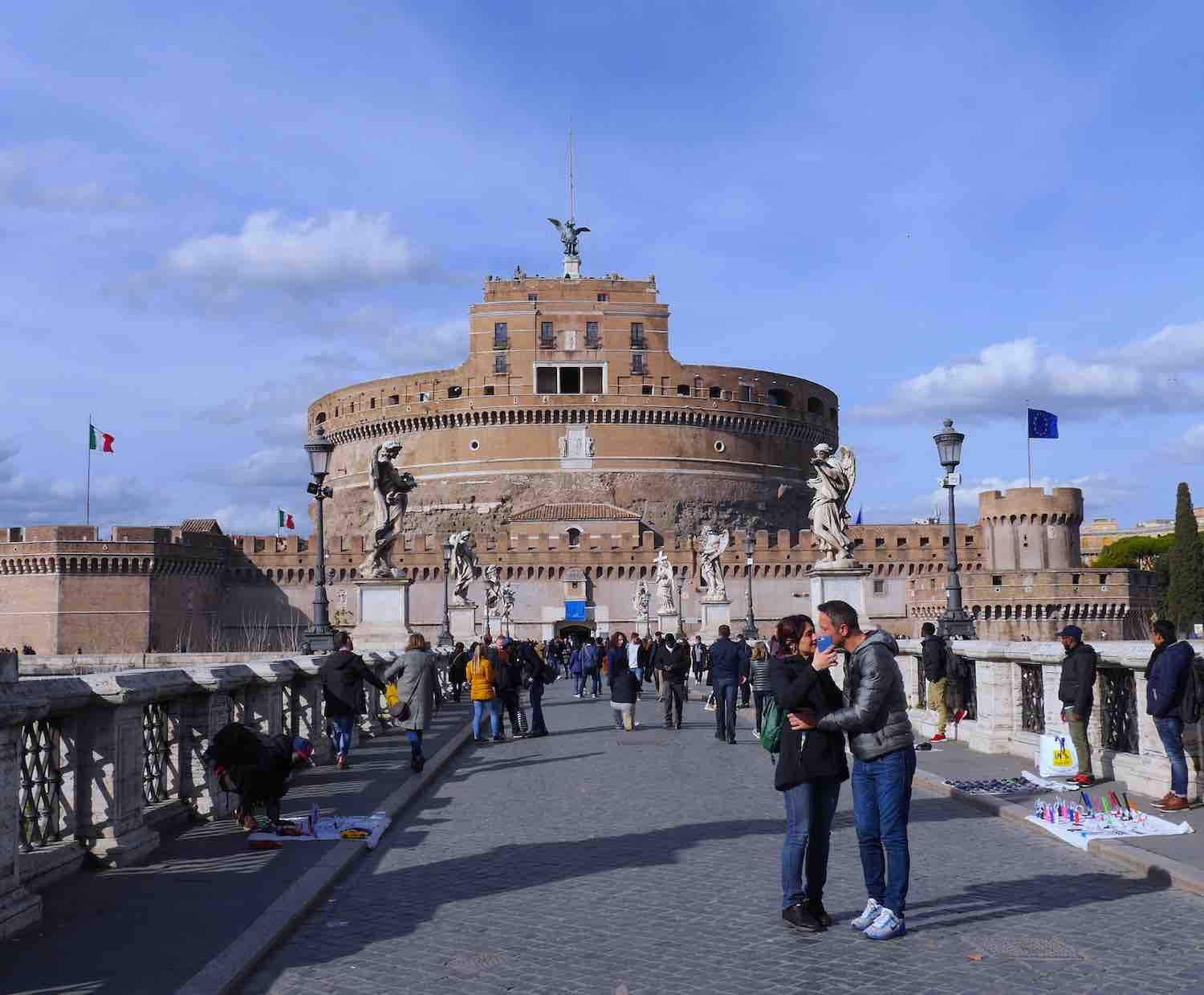
SANT’ ANGELO BRIDGE
You’ll pass through here to walk from Piazza Navona to Castel Sant’Angelo and then St. Peter’s Square. This pedestrian bridge is ideal for admiring a sunset with your better half or without and St. Peter’s dome in the background. Just beyond the Sant’ Angelo Bridge the Tiber curves southward.
The bridge dates back at least to 130 AD when the Roman Emperor Hadrian had it built as access to his mausoleum (in whose place today stands the fort of Castel Sant’Angelo). At the time of the Romans, it was called Helius bridge, as Hadrian had proclaimed himself “Sun God”.
The history of this bridge in Rome is long and a bit macabre. In the Middle Ages, it was known as St. Peter’s Bridge, because it guaranteed the only access to the Basilica. At the end of the 16th century, a pope who was leading a procession across the bridge to ask for an end to the plague had a vision of the archangel Michael sheathing his sword on top of the castle. This was read as a sign that the epidemic was over. From there the bridge was called Sant’Angelo bridge. Throughout the 16th century, atrocious executions of outlawed citizens were carried out at the bridge, and their heads were hung at either end as a warning.
In the 17th century, at the behest of Pope Clement 9, sculptor Gian Lorenzo Bernini took care of the appearance of the bridge. To the two statues of St. Paul and St. Peter placed at the entrance of the bridge towards Via del Banco di Santo Spirito, he added another 10 along the bridge, representing angels with the instruments of passion.
Bernini himself sculpted two statues. To admire 2 of the most beautiful sculptures in Rome, however, you’ll have to go to the church of Sant’ Andrea delle Fratte, because those on the bridge are copies (angel with the scroll and angel with the crown of thorns).
Read also my article about the Most Stunning Sculptures to See in Rome.
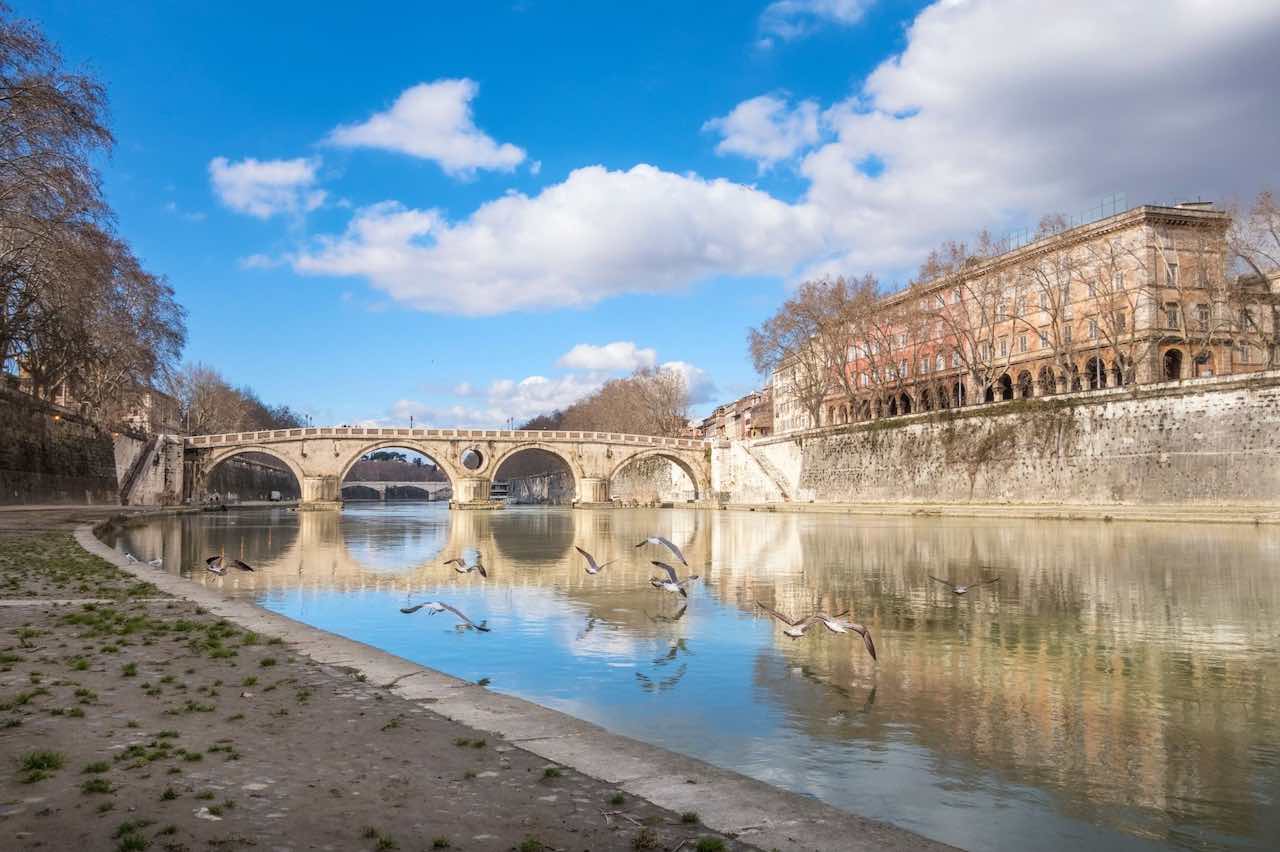
SISTO BRIDGE
Here is another bridge in Rome that is open only to walkers. Ponte Sisto connects the Trastevere district, at the height of Piazza Trilussa with the left bank of the Tiber at the height of Via dei Pettinari.
In the afternoon, sellers of paintings, handicrafts and musicians gather on the bridge. The bridge is nice to visit even on Sunday morning with a sunny day, when in Trilussa Square there is the artists’ market and cyclists and runners train along the Tiber.
The current appearance of the bridge dates back to the 15th century. The large eye placed at the center of the structure has the task of signaling the flooding of the river. The oldest known version of the bridge is that of the time of Emperor Caracalla, 215 AD.
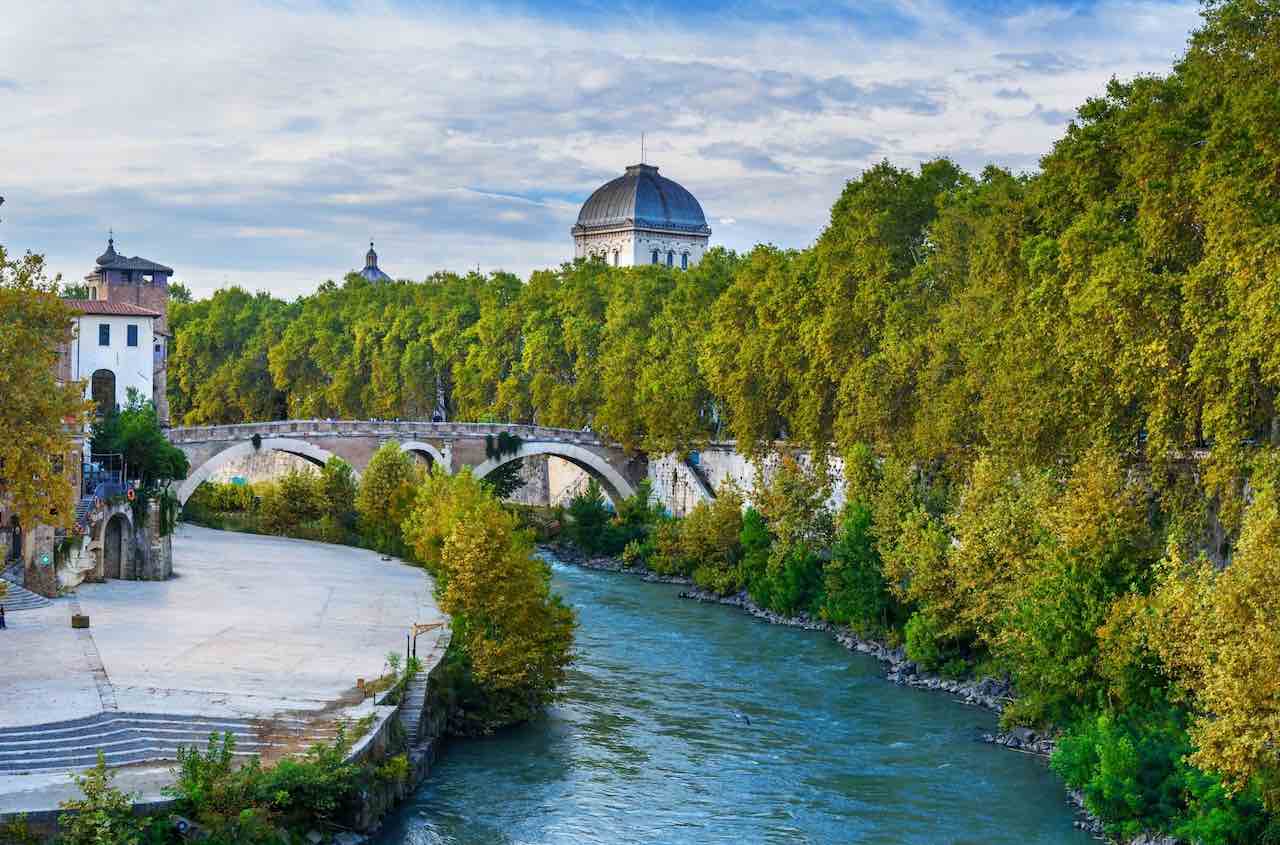
PONTE FABRICIO – BEST KEPT BRIDGE OF ROME
The Fabricio Bridge is the oldest bridge in Rome that is still in operation and has retained its original structure. As can be seen from the engraving on the stones of the central arch was built by “Lucius Fabricius, son of Caius and curator of roads” in 62 AD.
The structure connects the Jewish ghetto district with the Trastevere district through the picturesque Tiberina Island.
A walk around here is not to be missed on your list of things to do in Rome. On one end of the bridge stands the medieval Caetani Castle. From the bridge you can access, through a staircase, the bank of the Tiber and continue walking.
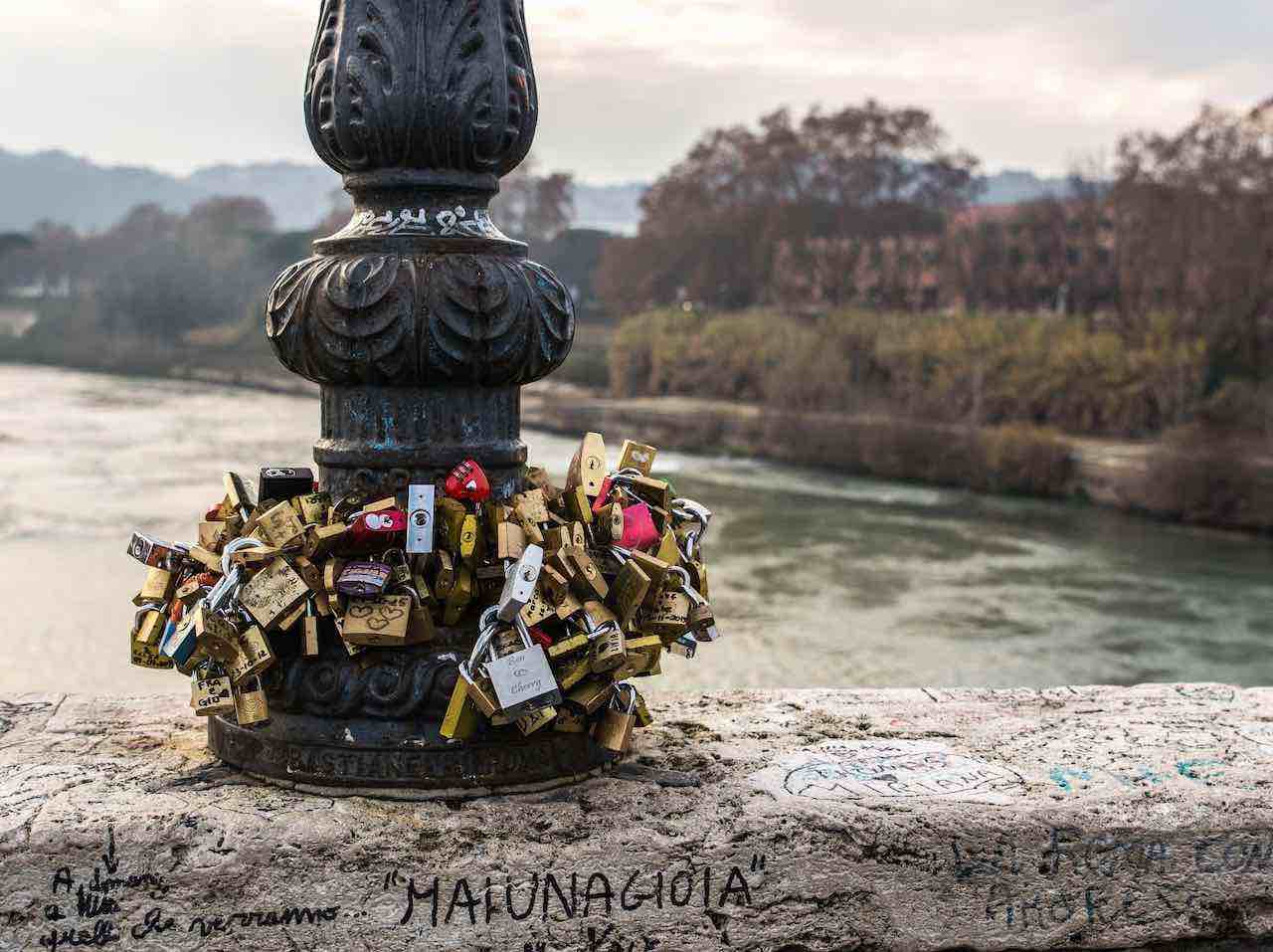
MILVIO BRIDGE
This bridge is very ancient as well and the original wooden structure must have dated back to the 3rd or 4th century BC. At that time, the Milvio Bridge was located at the border of the ancient city.
Here converged 4 consular roads: Cassia, Flaminia, Veientana, and Clodia. The current name of the bridge should derive from the name of the magistrate who authorized its construction in masonry, a certain “Molvius”, or from the adjective “mollo“, which also means “immersed in the water” (this would refer to the conditions of decay in which the bridge was left).
In recent times, Ponte Milvio has become one of the places par excellence of young lovers in Rome. On the iron parapets, in fact, couples have hung thousands of padlocks as a seal of their bond. The bridge is reserved for pedestrians and connects Piazzale Ponte Milvio, where there are cafes, bistros and pubs, with Piazzale Cardinal Consalvi. The entrance tower to the bridge was built by Giuseppe Valadier in the 18th century.
If you’re passing by, I suggest you try the excellent pizza by the slice of Ippo Pizza and visit the contemporary art exhibitions at the MAXXI museum. Near the bridge, every Sunday takes place the most famous antiques and collectibles market in the city.
Read also: Guide to Flea Markets and Thrift Stores in Rome.
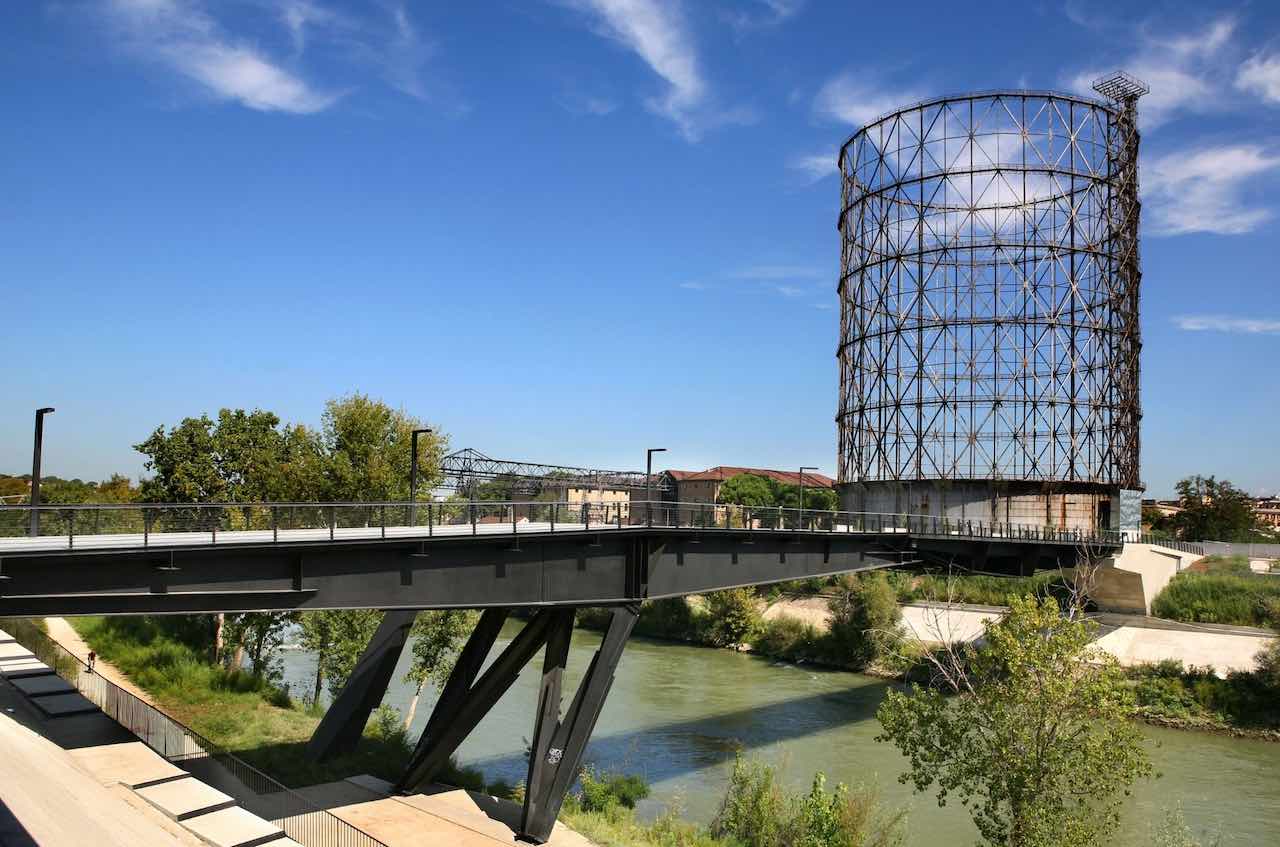
BRIDGE OF SCIENCE – MODERN BRIDGE IN ROME
Here is a bridge in Rome conceived and realized in contemporary times. Work on the construction of the Bridge of Science began in 2008. The materials used are reinforced concrete and steel.
The bridge connects the part of the Ostiense district where there is one of the headquarters of the University Roma Tre (the neighborhood has plenty of cute cafes, restaurants and pubs) with the Marconi district, where there is one of the best shopping streets in Rome, Viale Marconi. Ponte della Scienza is exclusively a bike/pedestrian bridge and is part of the bike path that goes from Eur to Castel Giubileo.
You can add this bridge to an itinerary through some off-track places in the city. The view is dominated by Rome’s now disused gasometer, which was the largest gasometer in Europe and is now considered an element of “industrial archaeology”. Some of the streets reachable from the Ponte della Scienza offer excellent examples of street art in Rome.
You’ll find places to visit around the Bridge of Science in these articles:
Where to Find Street Art in Rome
This is just an appetizer of course! There are more than 20 other bridges of Rome you can discover during your explorations of this big city!
I’ve written many more Rome guides, have a look:
Rome in A Day: Perfect Itinerary for First Time Travelers
Typical Foods from Rome and Where you can Have Them
20 Vegetarian and Vegan Restaurants to Try in Rome
The Best Itinerary to Visit Rome in Two Days