
Rome is a city so dense with things to see and features different facets from neighborhood to neighborhood that you’d have to explore it for at least a month to get to know it a little.
Many travelers get lost in its network of attractions and forget that a short trip is all it takes to reach a bunch of other destinations of historical, artistic and natural interest. There are also a few cities near Rome that offer a more sustainable, people-friendly, slow-paced lifestyle. These cities are also great bases from which to discover the countryside around Rome and Rome itself, but with much less stress and reduced costs of food and lodging.
Rome is located right in the center of the Italian peninsula and is connected by train and highway to major Italian cities. It takes about two hours to reach the beautiful Naples and Florence, but also Bologna… Among the cities near Rome we can therefore also include destinations in northern Italy.
ADD THESE CITIES NEAR ROME TO YOUR ITALY BUCKET LIST
VITERBO
Distance from Rome: 100 km
By train (Trenitalia): 1.30 hours
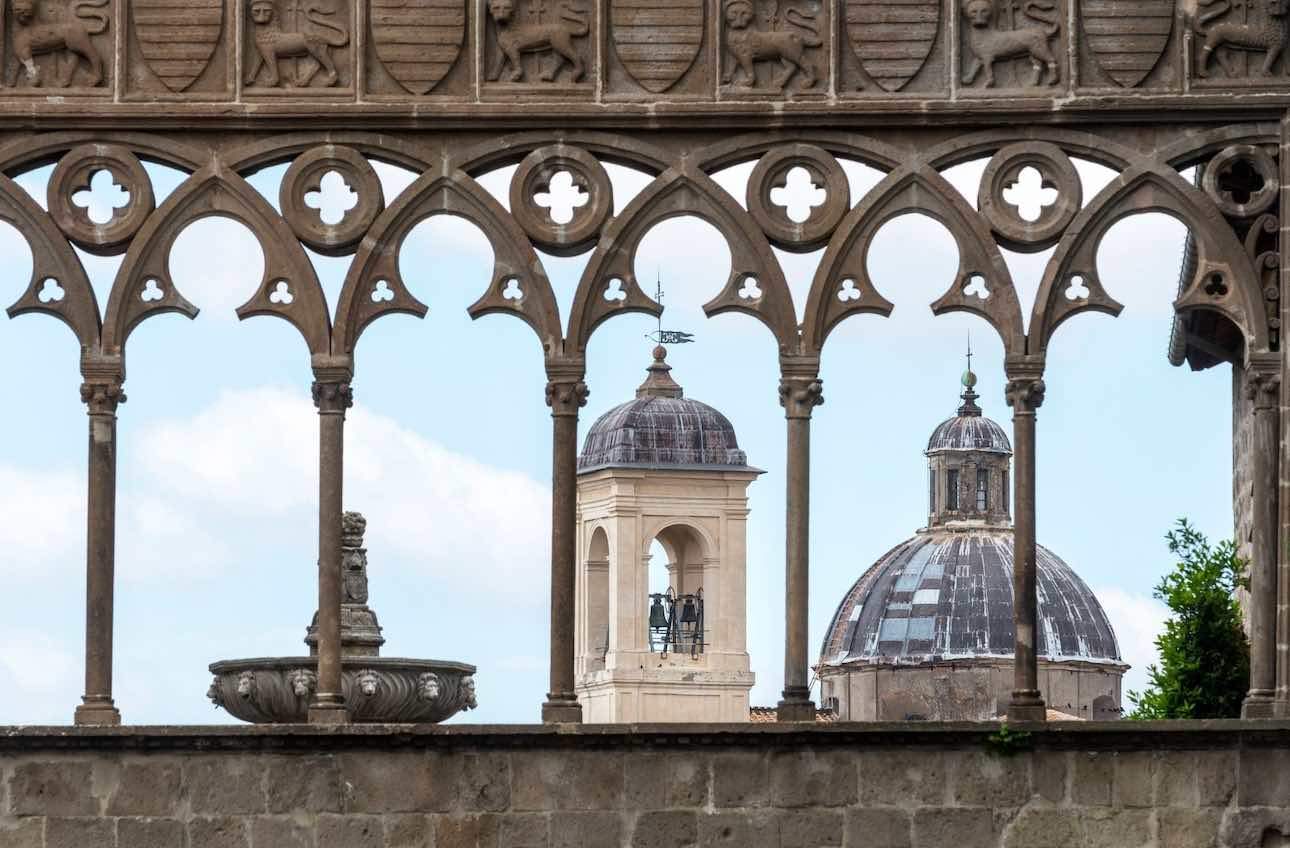
Viterbo is one of the most beautiful and quiet cities north of Rome. The defensive walls that surround the entire historic center are still perfectly intact, crossed by numerous majestic gates that lead to piazzas with ancient monuments and fountains made of peperino marble, a stone that characterizes the urban architecture of Viterbo.
If you are traveling by car, leave it in the parking lot of Via Faul and take the large elevator that will take you to the upper part of the city. You will find yourself in the heart of the San Pellegrino District or the “medieval quarter” of Viterbo. The square is overlooked by the Cathedral of San Lorenzo, the Palace of the Popes and the Museum Complex Colle del Duomo, where you will find the Archaeological Museum and the Museum of Sacred Art.
Viterbo hosted several “popes” in a historical period when Rome was not safe for them, so the city was also renamed “city of the popes”.
Reach Piazza della Morte, where you can have a coffee or an aperitif at the “Magna Magna” and then continue to the beautiful Piazza del Plebiscito and then to the National Etruscan Museum of Rocca Albornoz. The museum showcases precious artifacts such as carved sarcophagi resurfaced from the necropolises surrounding the city. Viterbo is today the largest city in Tuscia, an area that corresponds to ancient Etruria, the land of influence of the Etruscan civilization, which preceded the Roman one by a few centuries.
Take a walk along the minor streets of the historic center: you will find many small squares embellished with charming fountains.
If you reach Viterbo by train, enter through the imposing “Porta Romana” (Roman Gate) and head straight for the Medieval Quarter.
The region where Viterbo is located is also a constant destination for lovers of thermal baths near Rome. Definitely, a city where you can relax and regenerate.
HOW MANY DAYS DO YOU NEED TO VISIT VITERBO?
2 if you intend to spend one of the two days immersing yourself in the thermal baths; 1 if you want to visit only the historical center.
WHERE TO STAY
Do not miss the opportunity to stay in the historic center of this ancient and fascinating city. The B & B La Fontaine offers rooms in a historic residence.
RIETI
Distance from Rome: 79 km
By train (Trenitalia): 2 hours
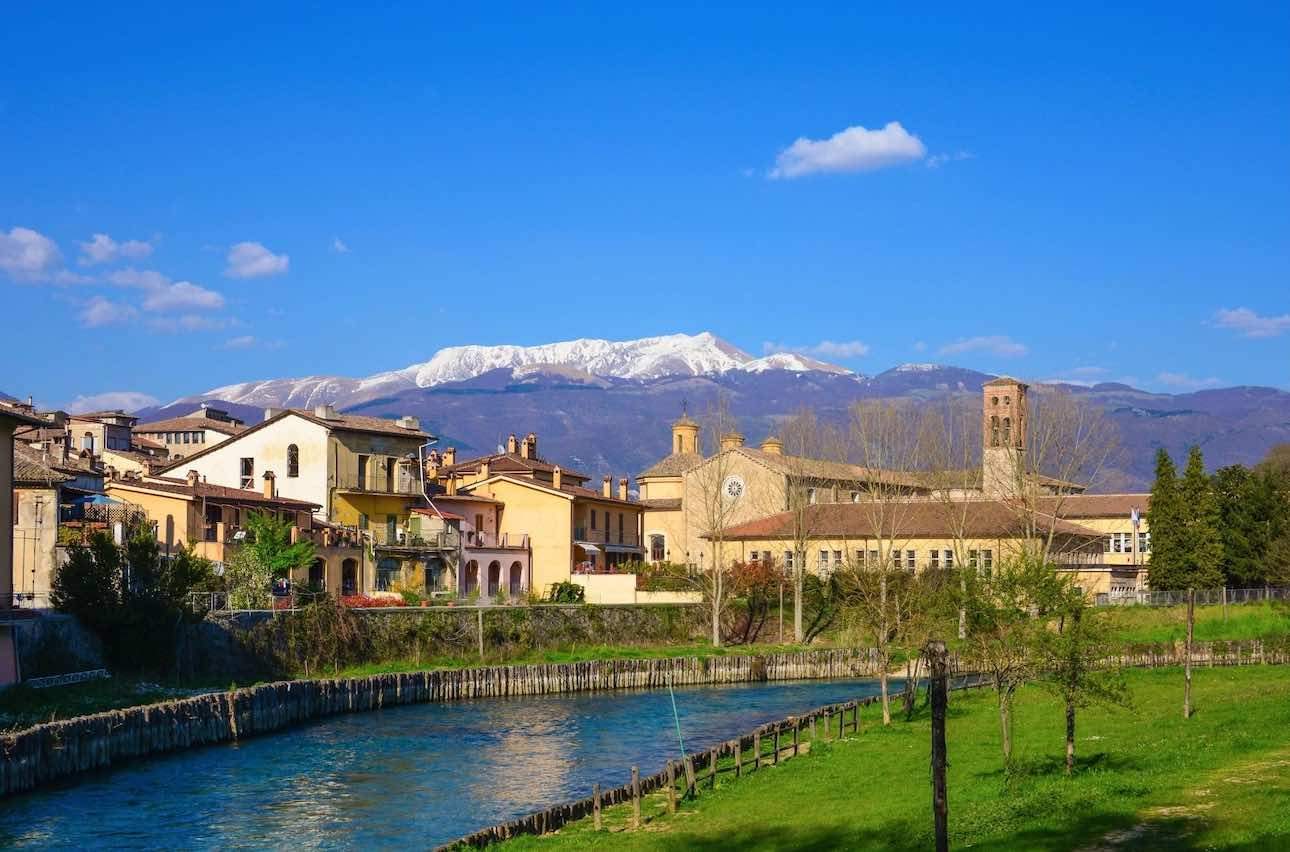
As Viterbo is the main city of the region commonly called Tuscia, Rieti is the reference city of the Sabina, the area of influence of the pre-Roman population of the Sabines. The Sabina extended between the regions of Lazio, Umbria and Abruzzo. Rieti is also considered by ancient tradition the “geographical navel” of Italy, due to its central position in the peninsula, and it is said to have been founded by the goddess Rea (from which the name “Rieti” derives), protector of nature and animals.
The Sabines were conquered and assimilated by the Romans as early as the 4th century BC. The legend of the “Rape of the Sabine Women” tells how many women of the Sabine people were attracted by deception at the shows and then kidnapped in order to create a Roman-Sabine lineage.
The Romans reclaimed the plain of Rieti, where flows the Velino, a beautiful river that runs through the city. The countryside around Rieti is one of the most productive in Italy: wine, oil and cheese are the most notable products.
Rieti is surrounded by mountains and unspoiled areas dotted with forests, where there are 4 sanctuaries founded by St. Francis, destinations for pilgrims but also lovers of trekking: the monasteries are in fact connected by paths that retrace the footsteps of the Saint, viable on foot, by bicycle and on horseback.
Near Rieti rises Mount Terminillo (2217 meters), one of the most popular places for the inhabitants of Rome and the surrounding area who love the mountains and skiing.
If you pass through Rieti, you can not fail to notice the mighty defensive walls of the 13th century and the ancient gates to the city: Porta d’Arci, Porta Conca, Porta Romana.
In Piazza San Rufo, where there are many ancient buildings, a modern monument reminds you that Rieti is the geographical center of Italy. The river Velino and its bridges also invite you to take slow walks and relax along the banks.
HOW MANY DAYS DO YOU NEED TO VISIT RIETI?
1 To visit the main sites in the historical center; 2 or 3 if you also want to make excursions to the mountains in the surrounding areas.
WHERE TO STAY IN RIETI
The Acque del Velino B&B is located right in the historic center.
PERUGIA
Distance from Rome: 172 km
By train (Trenitalia): 3 hours
Perugia is the capital of the Umbria region, known as the green heart of Italy, in the center of the Italian peninsula and landlocked. Umbria is a destination for slow travelers who love to be among the hills, stay in agriturismo and try local products such as wine and oil.
A city like Perugia, in addition to all this, offers impressive evidence of a millenary history, ancient and well-preserved sites that you can visit.
Perugia is also a city full of young people, with the University of Perugia founded in the 14th century and the largest University for Foreigners in Italy.
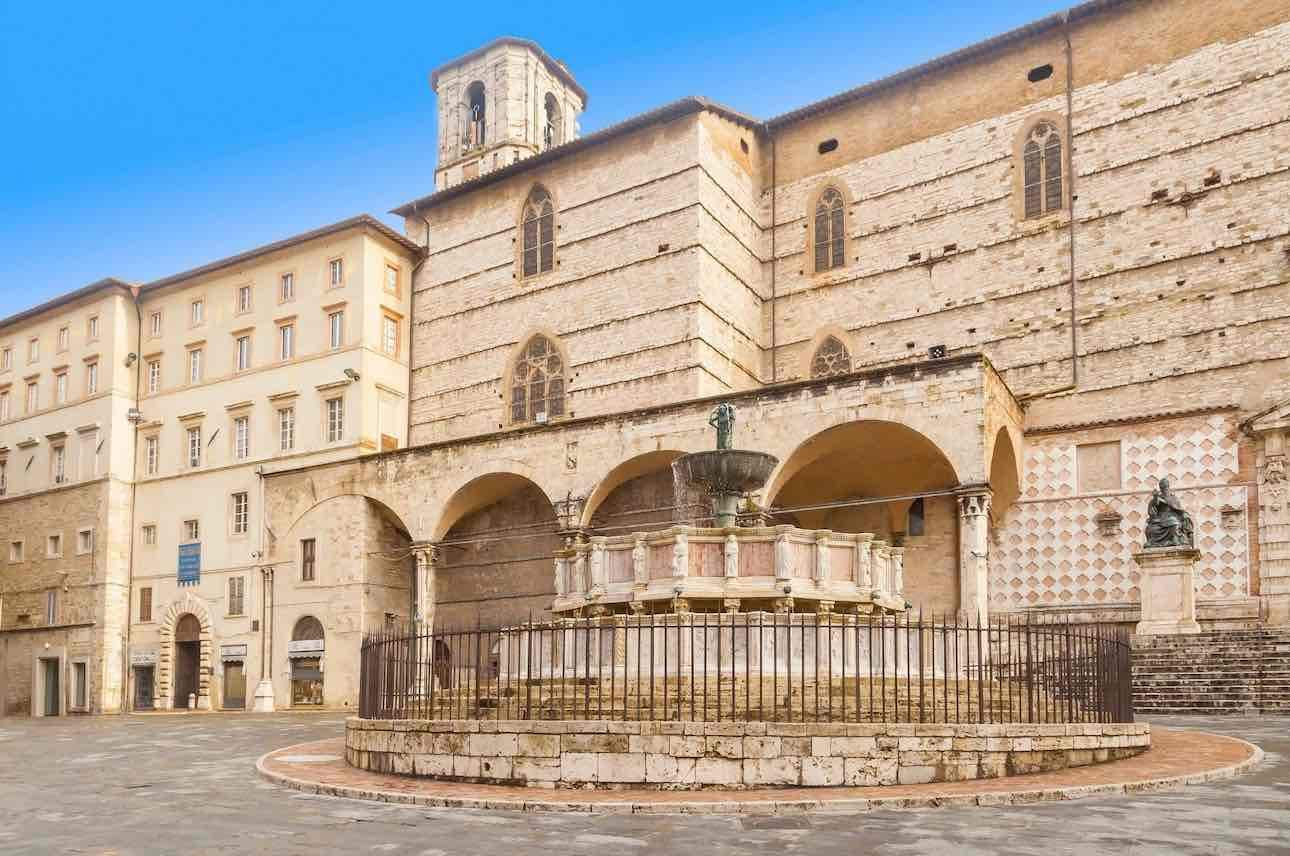
The heart of the city is Piazza IV Novembre with the Fontana Maggiore in the center, consisting of two pink and white stone basins carved with statues of characters related to the founding of the city and bas-reliefs depicting agricultural work, historical and biblical episodes. The fountain was fed for many centuries by the Monte Pacciano aqueduct, decommissioned in the 19th century. The upper part of the aqueduct is now walkable, offering one of the most scenic walks in the city, you can enjoy it starting to walk from the characteristic Porta Sant’Angelo.
On the Piazza IV Novembre you can also see the Cathedral of San Lorenzo, from the 14th century, the destination of religious pilgrimages because it hosts the chapel where a ring belonged to the Madonna is kept. The cathedral entertains also the Capitular Museum from which you can access an archaeological area where the different stratifications of Perugia are seen: Etruscan, Roman, late antique and medieval.
Perugia stands on a hill in the middle of the Tiber plain and was conquered first by the Umbrians, then by the Etruscans (7th century BC) and later by the Romans (3rd century BC).
Some of the Etruscan sites to visit are the Etruscan Well, the Etruscan Door (part of the walls of Perugia) and the Hypogeum of Volumni.
Perugia is also the native city of the Bacio Perugina, famous chocolate with hazelnut inside. The Factory of the Perugina is found just outside the historical center, it can be visited with a guided tour of approximately 1 hour during which you’ll witness the production of the Bacio and other products.
HOW MANY DAYS DO YOU NEED TO SEE PERUGIA?
At least 2.
WHERE TO STAY IN PERUGIA
The Chocohotel is inspired by chocolate!
These are the 3 cities near Rome I recommend the most, however, make sure to bookmark this article because I’ll add several cities to the list!
If you’re spending time in Rome, read also:
5 Fantastic Day Hikes near Rome
The 10 Most Beautiful Lakes near Rome
How to Visit Tuscany from Rome