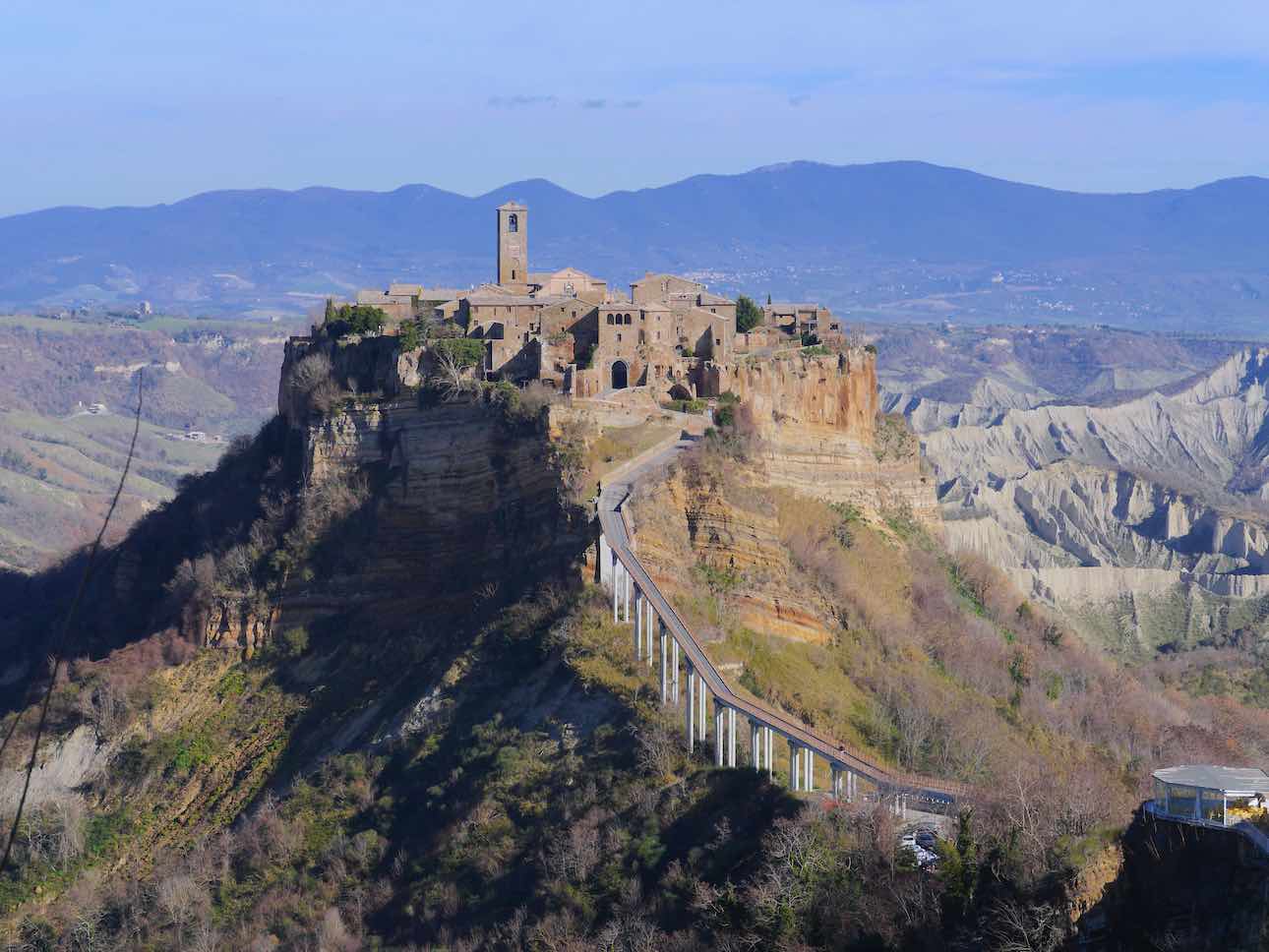
The village of Civita di Bagnoregio is located in the northern part of Tuscia, a region of the Italian countryside still off the tourists’ radar. About 10 km from Viterbo and 50 from Rome, the charm of “Civita“, as the locals call it, has attracted filmmakers, painters, and lovers of landscape photography over time. It is said that even the famous Japanese illustrator Hayao Miyazaki was inspired by the appearance of the village for his famous animated film, “Spirited Away”.
RECOMMENDED: More Than 20 Incredible Places to See in Tuscia
IS IT WORTH VISITING CIVITA DI BAGNOREGIO?
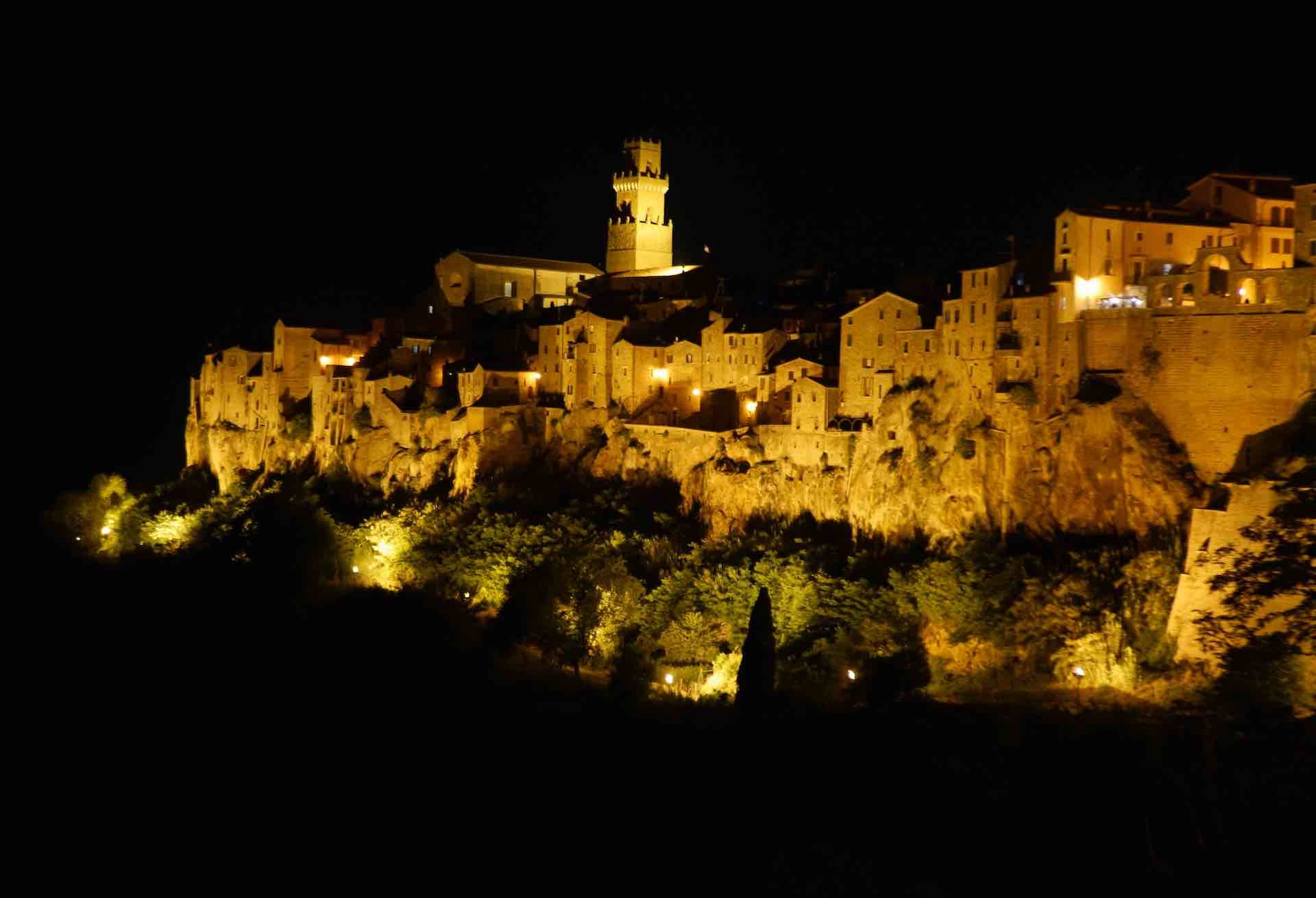
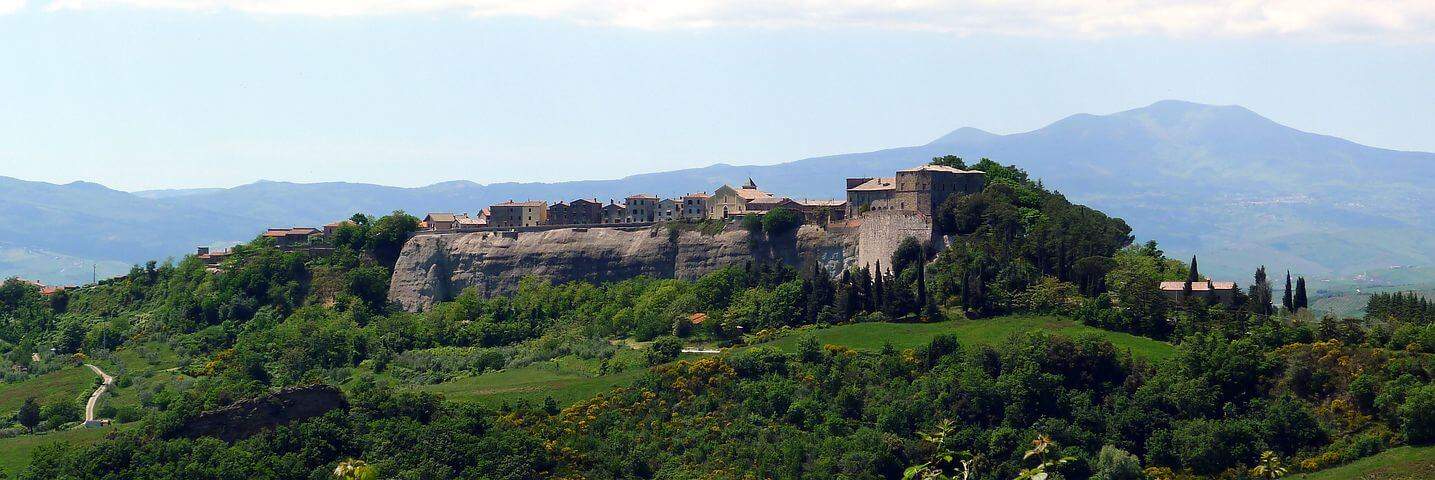
The view that you enjoy approaching Civita is worth the day trip from Rome, Florence, or Viterbo: the town sits on a red tufa cliff that stands out in the middle of an outstretch of limestone valleys called “Valle dei Calanchi” (valley of the ravines).
Once you arrive at the historical center, which you can visit in about an hour, the most satisfying thing to do is to eat the typical dishes in one of the taverns that are located around the main square Piazza San Donato.
Here’s a guide and tips for visiting this picturesque town near Rome.
HOW TO GET TO CIVITA DI BAGNOREGIO FROM ROME, ORVIETO AND VITERBO
The most comfortable and fastest way to reach Civita is by private car.
If you use public transportation instead, take a Trenitalia train to Orvieto or Viterbo and then from there a Cotral bus to the new part of Civita di Bagnoregio. Then take the local bus to the Parcheggio Belvedere. From there, walk about 1.8 km to the historic center, the most beautiful part of town, perched on the tufa cliff.
THE BRIDGE OF CIVITA DI BAGNOREGIO
Between the old part and the “real world,” there is a 300 m long bridge that will lead you to the only entrance door to the village, Porta Santa Maria. Walking on the bridge is definitely the most exciting part of the visit to Civita di Bagnoregio. Before setting foot on the bridge, you will have to pay a €5 entrance fee to the village.

PHOTOGRAPHING CIVITA DI BAGNOREGIO
You’ll get the best shots at dawn, at sunset, in the fog, and in the snow…
THE BEST PERIOD TO VISIT CIVITA DI BAGNOREGIO, ITALY
The intermediate seasons, spring and autumn, are the best times of the year to visit this picturesque village. In summer you will find many more travelers and you will definitely need to defend yourself from the sun.
A BIT OF HISTORY OF CIVITA DI BAGNOREGIO
This territory has been inhabited for at least 2500 years. This is attested by the Etruscan necropolis discovered in the vicinity of Civita and the numerous Etruscan caves dug into the tuff of the cliff. As happened in Calcata, another pretty village of Tuscia, the Etruscan tombs were used as cellars during the Middle Ages and in more recent times. The so-called “bucaione” of Civita, is an Etruscan tunnel that crosses the tufa cliff and comes out in the Valle dei Calanchi below.
Read also: Discover Etruscan Art through 5 Etruscan Museums in Lazio
The first written news about the village is in the 6th century when “Bagnorea” was listed among the episcopal seats of the peninsula. The Romans and later the Goths and the Longobards conquered it and from the 12th century the Monaldeschi, lords of the nearby Orvieto, subjected it.
In the 13 century lived in Civita San Bonaventura, the patron saint of the town, of which you can visit the hermitage, a cave not far from the Parcheggio Belvedere.
In the 15th Century, the inhabitants of Civita succeeded in besieging the castle of the Monaldeschi and in obtaining independence, but they lost it afterward to the King of France and to the Borgia family the following century. In the 17th and 18th centuries, violent earthquakes caused parts of the cliff and several buildings to collapse. In ancient times, there were 5 gates to the city while today only one remains.
WHAT TO SEE IN CIVITA DI BAGNOREGIO
Being understood that the most satisfying things about Civita are the panorama, the typical dishes and the independent walks to discover the village, here is what else you can see here.
CAVE OF SAN BONAVENTURA
An ancient Etruscan tomb, it was also the hermitage of the patron saint of the village, who is said to have been initiated into the Christian religion by none other than St. Francis himself, during his trip to Bagnoregio. The cave is located a few steps from Belvedere Parking.

SANTA MARIA GATE
It is the only access to town, waiting for you at the end of the panoramic bridge that connects Civita to the “mainland”. The tradition dates it back to the Renaissance, by the famous architect Jacopo Barozzi called Vignola. The door consists of a pepper stone arch surmounted by a small loggia with three arches. There are two bas-reliefs with a lion holding a man with claws.

PIAZZA SAN DONATO
It’s the main square of the town, on which overlook the Cathedral of San Donato and the sixteenth-century Palazzo Alemanni. In the palace there is the Geological and Landslide Museum, which documents the geological history of the town and of the Valley of the Calanchi, but also offers information on St. Bonaventura and displays a model of Civita di Bagnoregio.
MUSEUM ANTICA CIVITAS
Set up inside an Etruscan cave, it exhibits objects from the peasant tradition and the reconstruction of a bedroom.
Walking through the alleys of the village you will also find the House of St. Bonaventura, the Bishop’s Palace and a 16th-century mill. The most beautiful discoveries, however, will be the views of the Valley of the Calanchi from the many tiny terraces scattered across the village.

EAT IN CIVITA DI BAGNOREGIO
Among the typical dishes, there is fettuccine with chicken giblets and various types of cold cuts, but also other dishes of Lazio such as lombrichelli (a type of homemade pasta similar to spaghetti) seasoned in different ways.
READ ALSO: A Guide to the Best Food of Lazio
WHAT TO SEE NEAR CIVITA DI BAGNOREGIO
If you make it as far as this off-the-beaten-path village, add at least one more stop, the region is full of places to visit such as:
Lake Bolsena – 15 km
Not only the largest lake in Lazio but also the largest lake of volcanic origin in Europe. Visit at least one of the towns overlooking the lake: Capodimonte, Marta, or Bolsena with its fascinating castle.
CHECK OUT: Exploring the Hidden Gems of the Italian Countryside
Viterbo – 28 km
It is the largest city in northern Lazio, yet it is not as well known as Civita di Bagnoregio. It’s worth stopping here at least a couple of days, enjoyed among thermal baths, excellent and inexpensive food, and a picturesque medieval quarter with intact defensive walls.
Orvieto – 21 km
A medieval town with a majestic cathedral, actually one of the most beautiful cathedrals in Italy and the mysterious, monumental Well of Saint Patrick.
Calcata – 85 km
If you love small villages suspended in the middle of breathtaking landscapes, after Civita you must definitely see Calcata, the village repopulated by artists and hippies since the ’70s. Nearby there is also an open air museum on 3 hectares of lush forest, the best example of a museum of Art in Nature in Italy that exhibits 45 “ecological” installations.
SUGGESTED: A Local's Guide to Calcata Vecchia, the village of Hippies and Cats

WHERE TO STAY IN CIVITA DI BAGNOREGIO
To savor the unique landscape of Civita at any hour of the day or night, spend a night in a B&B in the historic center. For a more functional stay instead, and to visit other beautiful places in northern Tuscia, book a B&B in the historic center of Viterbo.