
As an Italian, I’ve always been fascinated by the beauty and richness of our language, especially when it comes to poetry. Italian poetry has a long and illustrious tradition that spans centuries, from the epic poems of Dante and Petrarch to the modern works of Montale and Ungaretti. But today, I want to focus on something a bit different – short Italian poems. These small but powerful expressions of love, nature, and life capture the essence of Italian culture and the Italian soul.
There are authors who, by breaking the rules, have been able to get straight to the point even in a few words, or rather in a few lines, in this case. Today we delve into the syllables of the short poems that have written the history of Italy, without making too much noise, but always going straight to the point.
14 best short Italian poems selected by an Italian
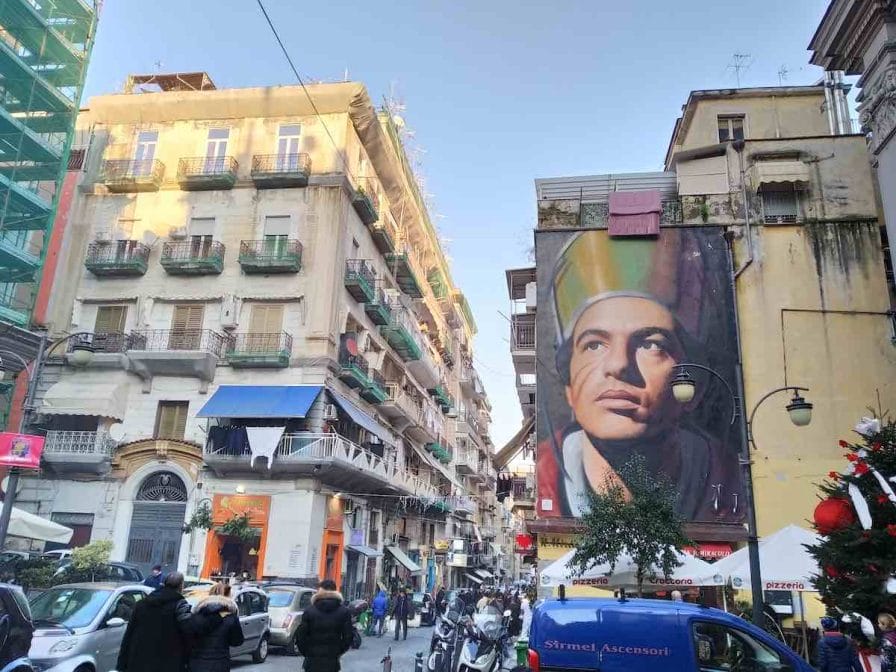
Happiness! – by Totò
There is a character who inevitably comes to mind every time I think of Italy. I’m talking about one of the greatest artists that I have had the honor of seeing born and raised in my country: Totò! Everyone remembers him for his ability to make people laugh, for his refined thinking, and for his great talents as a playwright and filmmaker.
However, not many know that Totò devoted a good part of his life to writing and poetry. His poetry reflected the reality of life with an infusion of humor and wit that made it unique. Here’s one of the most striking examples, written in the Neapolitan dialect:
Felicità!

Vurria sapè ched'è chesta parola,
vurria sapè che vvò significà.
Sarrà 'gnuranza 'a mia,
mancanza 'e scola,
ma chi ll'ha 'ntiso maje annummenà?!
Happiness!

I would like to know what this word is,

I would like to know what it signifies.

Perhaps it's my ignorance,

Or my lack of education,

But has anyone ever heard of it?!
Here too, as in many other texts by Totò, irony is the mistress. The choice to use the dialect, then, emphasizes this aspect. The magic of Totò lies in making a text that appears meaningless, very direct, with a strong stance towards society.
Totò, by making fun of himself and us, tells us that to be happy, we don’t need much, not even to go to school. To be happy, we just need to decide to be so.
Happiness – by Trilussa
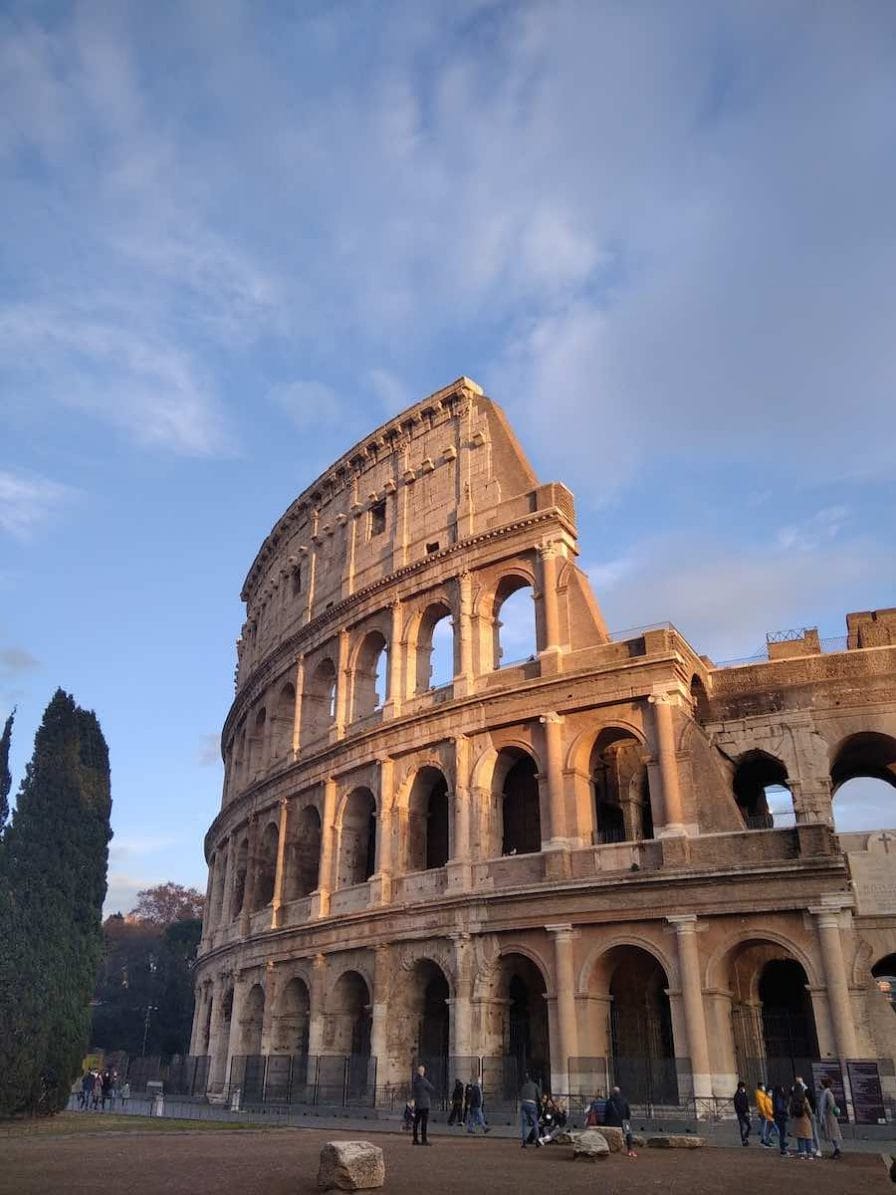
If we talk about Italian poems about happiness, and irony, it becomes really impossible not to mention another master of these two disciplines: Trilussa. He lived just a few hundred kilometers away from Totò, in Rome, and he too knew how to make fun of the society that he didn’t like too much.
With the excuse of irony and comedy, he walked on a tightrope, but always said things as they were, even in a few lines. For him too, happiness was a topic to be treated in an ironic key, and that’s why he wrote a poem with the same title as Totò’s.
Felicità

C’è un’ape che se posa

su un bottone de rosa:

lo succhia e se ne va…

Tutto sommato, la felicità

è una piccola cosa.
Happiness

There's a bee that lands

on a rosebud:

it sucks it and flies away...

All in all, happiness

is a small thing.
Let’s see immediately how his thinking is similar to Totò’s. To be happy, you don’t need much, happiness comes from small things according to Trilussa too. Even the bee, a hardworking animal that seems never to be able to stop, for a moment of relief and happiness, leans on a rose, staying there for a short time.
Finding happiness in small things is an aspect that fits very well with such short and simple poems. The coherence of these two poets who write about such a varied and rich topic in a few lines is disarming and makes us reflect on how little it really takes to be happy.
Agony – by Giuseppe Ungaretti
Now let’s move on to a poet who, on the contrary, has never been able to use irony, precisely because of his experience. Giuseppe Ungaretti in his poems tells of themes such as war, experienced by him firsthand, and of death and pains caused by it. He often focuses on self-awareness for the human being, and even he, if you learn to read between the lines, in his own way speaks of happiness.
Agonia

Morire come le allodole assetate

sul miraggio

O come la quaglia

passato il mare

nei primi cespugli

perchè di volarenon ha più voglia

Ma non vivere di lamento

come un cardellino accecato
Agony

To die like thirsty larks

on the mirage

Or like the quail

having crossed the sea

in the first bushes

because it no longer wants to fly

But not to live in lament

like a blinded goldfinch.
Perhaps you will find it strange to associate the concept of happiness with what looks like an Italian poem about death. But here Ungaretti, one of the best Italian poets of all time, does a very detailed and refined job. He tells us that he would much rather die for mistakes he has made or weaknesses, rather than spend a lifetime complaining. The poet does not want to live “like a blinded goldfinch”, because according to him life is lived only when one acts, experiences, and follows one’s dreams.
And here we can then return to talking about happiness. For him, making mistakes or living situations where one fails is not important, all that matters is living a life full of emotions and experiences. Certainly, his attachment to a full life comes from the horrors he saw and experienced during the war in which he fought.
We can only imagine what keeps us alive during the darkest experiences, such as those of war.
Hope – by Gianni Rodari
Now I propose to you the poem of a man who in life always knew how to bring a smile to young and old through his writings. The Piedmontese poet Gianni Rodari is popular for his short Italian rhyming poems.
Speranza

Se io avessi una botteguccia

fatta di una sola stanza

vorrei mettermi a vendere

sai cosa? La speranza.

“Speranza a buon mercato!”

Per un soldo ne darei

ad un solo cliente

quanto basta per sei.

E alla povera gente

che non ha da campare

darei tutta la mia speranza

senza fargliela pagare.
Hope

If I had a little shop

made of just one room

I'd like to start selling

you know what? Hope.

"Hope at a good price!"

For a penny I'd give

to a single customer

just enough for six.

And to the poor people

who have nothing to live on

I'd give all my hope

without making them pay.
The sweetness and refinement of the poet, as always, emerge in every syllable, in every letter. Not by chance, in fact, this poem was chosen by the European Commission on March 23, 2020 to be read at the end of an official committee that had been held to talk about the pandemic.
The seashell – by Salvatore Quasimodo

There is no doubt that for everyone that was one of the most traumatic periods of the last century, but there is someone on whom the pandemic has probably weighed more: children. We are certain that the greatness and delicacy of Salvatore Quasimodo would have known how to dedicate the most beautiful words to children, to comfort them in such a moment, but also in many others. In a sense, unconsciously, he already did so, with a poem that still today, with a few simple phrases, leaves us with a sense of sweetness every time we read it.
La conchiglia marina

O conchiglia marina, figlia

della pietra e del mare biancheggiante,

tu meravigli la mente dei fanciulli.
The seashell

Oh seashell, daughter

of stone and white sea,

you amaze the minds of children.
It is truly fascinating to see how Quasimodo manages, with these few syllables, to become a child himself. The love for his land, eastern Sicily, shines through these short verses, so much so as to name the inanimate being “daughter”. Who knows what he would say, however, today knowing that his poetry still amazes and captivates the minds of everyone.
Passions – by Umberto Saba
A poet who made passion his life was certainly Umberto Saba. He lived a life breathing the scent of his passion, the scent of the pages of his books inside his rich library in the center of Trieste, a beautiful city on the Adriatic Coast. When he wrote this poem, perhaps he was speaking precisely about this.
Passioni

Sono fatte di lacrime e di sangue

e d’altro ancora.

Il cuore
batte a sinistra.
Passions

They are made of tears and blood

and more.

The heart

beats on the left.
It is easy to identify the need to express how painful it is, sometimes, to live one’s passion through the words of Saba. Certainly, the trauma of separation from his family from a very young age affects his not-always-positive view of life. His somewhat gruff character, perhaps, was also due to this.
He had a love-hate relationship with many people who entered his life. One of the few to have reserved a special place in his heart seems to have been the little orphan Carlo Cerne, with whom Saba shared the work in the bookstore and who he then stayed with. Today it is Carlo’s son, Mario, who runs the charming bookstore in the center of Trieste.
I Hate and I Love – by Catullus
We have talked about love and hate, feelings that are so contrasting but often go hand in hand. One poet, in particular, has been able to unite these concepts and speak of them in a simple and effective way. We are talking about Catullus, a Latin poet born in Verona in 84 BC, who already in that distant era questioned the coexistence of hate and love.
Odio e amo

Odio e amo. Perché lo faccia, ti chiedi forse.

Non lo so, ma sento che succede e mi tormento.
I hate and I love

I hate and I love. Why do I do it, you ask perhaps.

I don't know, but I feel it happening and I am tormented.
With this oxymoron, already in the title Catullus expresses a dilemma to which we, still today, are often subjected. On the one hand, the love for his woman. On the other hand, the hatred he feels for her because of her constant infidelities. It is certainly worth considering the fact that humans, after years and years of evolution, have still not been able to defeat the demons that plague their souls since the time of the Ancient Roman Empire.
We would be tempted to say in the face of this, “You know, that’s life.”
Life – by Antonia Pozzi
Speaking of life, some of the most beautiful Italian poems about life are those of the great poetess Antonia Pozzi, who committed suicide when she was only 26 years old.
From what she left written, the fateful choice was made precisely because of the “too much life I have in my blood“. With a poem, masterfully, Antonia describes her point of view, her heaviness of being in the world.
La vita

Alle soglie d’autunno

in un tramonto

muto

scopri l’onda del tempo

e la tua resa

segreta

come di ramo in ramo

leggero

un cadere d’uccelli

cui le ali non reggono più.
Life

At the threshold of autumn

in a sunset

mute

you discover the wave of time

and your surrender

secret

as from branch to branch

light

a fall of birds

Whose wings no longer hold.
Here too, as in many other poems by Antonia, the anthropocentric view is practically annulled by the importance given by the author to nature. Leaves, sunset sun, tree branches, birds. All natural elements apparently devoid of meaning, but to which she knows how to attribute fundamental importance. The relationship between man and nature, which she highlights so well with her texts, makes them more relevant today than ever before. Despite being written over seventy years ago, Antonia Pozzi’s poems still have so much to teach us.
A leaf falls – by Grazia Deledda
When it comes to nature and poetry, it is impossible not to mention Grazia Deledda. Often, with her texts, she takes the reader into a world where man does not dominate. Through the elements of nature, she shows us a different view of life, just like in one of her most famous poems.
Cade una foglia

Cade una foglia che pare

tinta di sole, che nel cadere

ha l’iridescenza di una farfalla;

ma appena giunta a terra

si confonde con l’ombra, già morta.
A leaf falls

A leaf falls that seems

tinged with sunshine, which in its fall

Has the iridescence of a butterfly;

but as soon as it reaches the ground

It mingles with the shadow, already dead.
Just like Antonia, Grazia describes the passage of human life through a simple and natural gesture. Following the cycle of seasons, for trees, is the most normal thing there is. And it should be the same for human beings. The falling leaf reminds us of our existence. Like the leaf abandons its tree, so too our existence passes from one phase to another in a cyclical, natural way. And it is right, for us, to accept it.
Kiss – by Alda Merini

We could say so many things about poetess Alda Merini. Certainly, her strength and her ability to rationalize the emotions experienced through poetry have made her the great poetess that we still love and study today. Love, for her, has always been that aspect which, with regard to existence, has been able to make it a little lighter. Like a leaf, perhaps we could say.
Bacio

Bacio che sopporti il peso

della mia anima breve

in te il mondo del mio discorso

diventa suono e paura.
Kiss

Kiss that bears the weight

Of my short soul

In you the world of my speech

Becomes sound and fear.
With these brief and wonderful verses, Alda encapsulates the essence of a gesture of love from her point of view. With a kiss, one can lift oneself from the burdens of the world, but also question oneself. We are often disarmed in the face of a kiss. And probably, despite her strength like a lioness, she too knew how to yield to the immensity of such a simple gesture.
Crying – by Giovanni Pascoli
Expressions of human emotions have always been, for poets, elements of great interest. A great master of “emotional analysis” was certainly Giovanni Pascoli. The themes addressed in his poems often concerned childhood. In some texts, however, his gaze rested very accurately on emotions. In a particular text, where he too – perhaps not by chance – speaks of a kiss, we can see this gaze of his.
Pianto

Più bello il fiore cui la pioggia estiva

lascia una stilla dove il sol si frange;

più bello il bacio che d’un raggio avviva

occhio che piange.
Crying

More beautiful the flower to which the summer rain

Leaves a drop where the sun breaks;

More beautiful the kiss that of a ray spurs

The eye that weeps.
This is one of my favorite short Italian love poems. Here, nature serves as a backdrop, as often happens in Pascoli’s texts. But there is an additional element, alongside the usual melancholy of his poems: the kiss. The sweetness with which Giovanni Pascoli describes the beauty of a love born from tears allows the reader to fully empathize. To feel the delicacy of the flower and the depth of a kiss, which is never taken for granted.
Flower of Nothingness – by Diego Valeri
It is now clear how fundamental nature is for many authors. Images and emotions can be transferred onto it. One master of these “transfers” is the poet Diego Valeri. For him, nature is fundamental, living autonomously and detached from man. This means that each of his poems is simple and direct, but with a very deep meaning, which can often be found among branches, leaves, and flowers.
Fiore del nulla
Quando ti schiudi, fiore

divino, assorto è il tempo

fuor di notte e di giorno,

l'aria non ha colore,

tutto è perduto intorno.

Tu solo sei, divino

fiore del nulla, amore.
Flower of Nothingness

When you hatch, flower

divine, absorbed is the time

Out of night and day,

the air has no color,

all is lost around.

You alone are, divine

Flower of nothingness, love.
Valeri loves nature so much that he divinizes the flower, or rather love. Although he defines it as “nothingness”, he knows it is a very strong anchor of hope. Probably written at a time when precarious existence was a fixed thought, Valeri clings to love to accept destiny. It is an art, but also a very fine craft, to be able to give nature so much meaning in so few verses.
To Rina – by Giorgio Caproni
Among the many poets who use nature to express their feelings, we cannot exclude Giorgio Caproni. The main themes, such as the mother, travels, or his beloved cities, Genoa and Livorno, were always enriched by natural elements. In a particular poem, we notice how he wants to make nature speak to express his love.
A Rina

Senza di te un albero

non sarebbe più un albero.

Nulla senza di te

sarebbe quello che è.
To Rina

Without you a tree

Would no longer be a tree.

Nothing without you

Would be what it is.
Is it possible, in just four verses, to describe the boundless love for one’s other half? Well, Giorgio Caproni could answer yes. And the world in which he does so is masterfully simple. What would we be without trees? What would we be without love? He probably started from these two intuitions to dedicate these four verses to his wife. So concise and so rich in feeling.
These lines are taken up in one of the most popular Italian romantic songs of the 1990s, “Quello Che” by the band 99 Posse.
I would like to live asleep – by Sandro Penna
We conclude our journey made of syllables and verses with a poet who would certainly have known how to survive all the evils: Sandro Penna. His writing differs from the hermetic writing of his contemporaries, in fact, his verses are always very simple and explicit. His intentions transpire fluidly, through words accessible to everyone. Being understood seems to always be his priority, without ever forgetting the depth of the analysis of the human soul.
Io vivere vorrei addormentato

Io vivere vorrei addormentato

entro il dolce rumore della vita.
I live would like to live asleep

I would like to live asleep

Within the sweet noise of life.
The poet’s intention is very clear here. Penna would like a life made of thoughts, rather than sensations. He would like to live in a sort of constant sleep, without losing the sense of existence. By combining the adjective “dolce” (sweet) with “rumore” (noise), Penna tells us how life can have a thousand shades and meanings for him.
Conclusions
In conclusion, Italian poetry is a treasure trove of beauty and emotion, and short poems are a perfect example of its power. From the melancholic verses of Giovanni Pascoli to the vivid imagery of Giuseppe Ungaretti, each poet has a unique way of capturing the essence of life in just a few lines. Whether you’re a poetry lover or a newcomer to the genre, these short Italian poems are sure to leave a lasting impression. They remind us that sometimes, less is more, and that the simplest words can convey the most profound meanings. So next time you’re in need of inspiration, turn to these poets and let their words transport you to the heart of Italy’s rich cultural heritage.